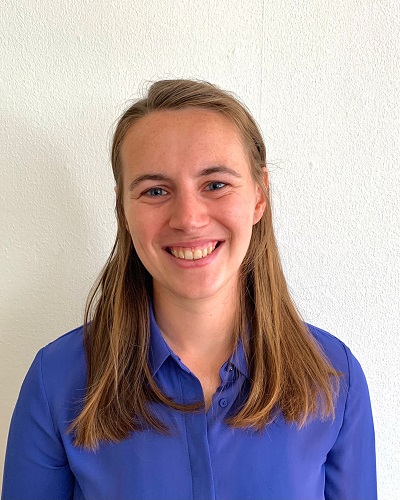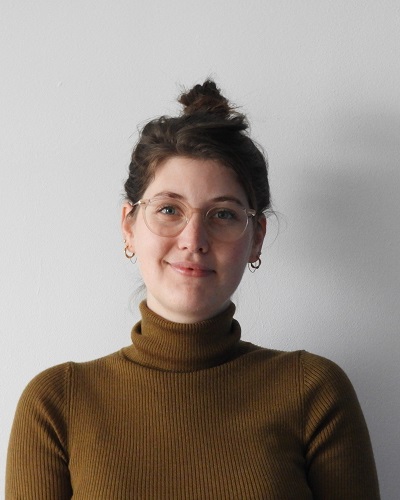

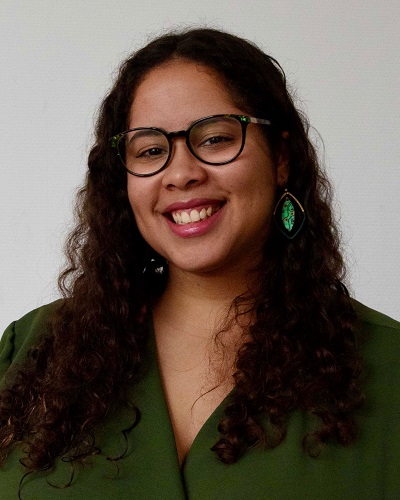
The KITLV hosts several international postdoctoral researchers (fellows). KITLV fellows are invited to present lectures, participate in seminars and cooperate in the institute’s research projects.
Wolfram Schaffar
Since 2010, Wolfram Schaffar has been working as professor for political science at the Institute of Development Studies at the University of Vienna, Austria. Prior to this position, he has been teaching at the Department of Southeast Asian Studies at the University of Bonn, at the Faculty of Political Science of Chulalongkorn University, Bangkok and the Department of International Relations at Yangon University, Myanmar. In his research, he focuses on state theory, constitutionalism, social movements, and democratization in the Global South - with a regional focus on Thailand and Myanmar/Burma, but with strong, albeit layman's interest in Egypt, South Africa and countries in Latin America. He is currently leading a research project on social movements and constitutionalism in Thailand, funded by the Jubilee Fund of the Austrian National Bank. He is also an active member of the Association of Critical Social Research (Assoziation kritische Gesellschaftsforschung, AkG). He will be at KITLV until October 2013 at the Clients to Citizens Project.
Marleen Dieleman
Dr. Marleen Dieleman is associate professor and associate director of the Centre for Governance, Institutions and Organisations (CGIO) at NUS Business School in Singapore. She holds a Ph.D. from Leiden University and a master degree in business administration from Rotterdam School of Management, both in The Netherlands.
Marleen teaches corporate strategy and her research interests are in Asian family businesses -in particular in Indonesia- and in the governance of Asian firms. She has published widely on these topics, including articles in academic journals, books, book chapters, cases and reports. Her work is featured regularly in international media such as the Financial Times and she is a frequent invited speaker on governance in Asia. Marleen also teaches in executive education programs and has extensive consulting experience.
Marleen is vice president of the Association of Dutch Businesspeople, committee member of Family Business Network Asia in Singapore, and an advisor to BoardAgender.
Suraya Afiff
Suraya Afiff is an associate professor at the Department of Anthropology, Faculty of Social and Political Sciences at University of Indonesia. Since 2009, she also holds a position as the head of the Center for Anthropology Studies in the same university. Her areas of interest and expertise include land tenure policy, land and resource conflicts, political ecology, agrarian movements, and climate change mitigation issues in Indonesia. At the moment she is a post-doc fellow of the JARAK research cluster at KITLV. JARAK is one of the research clusters under the Agrarian Beyond Food program which focuses on the commoditization of an alternative biofuel crop in Indonesia. Her own research in JARAK focuses on the introduction of Jatropha curcas (known in Indonesia as 'Jarak Pagar') as an alternative crop for biodiesel feedstock in Indonesia using actor-network theory perspective as one of the analyzing tools.
David Kloos
David Kloos studied history at the VU University Amsterdam. He recently finished his PhD dissertation, entitled Becoming better Muslims: religious authority and ethical improvement in Aceh, Indonesia, which is based on a combination of historical and ethnographic research. David will be staying at the KITLV from March until June 2013, as a fellow on the research program ‘Recording the Future: and audiovisual archive of everyday life in Indonesia in the 21st century’. The objective of this fellowship is to find ways of doing research in this archive-in-making. What kind of information are we dealing with? What are we actually looking at? What are the differences between working with this archive and other research methods we have at our disposal? What does the RtF archive contribute to the study of everyday life in, and the contemporary history of, Indonesia? David will try to find an answer to these and other questions by conducting a comparative study, on basis of the RtF material, of everyday life in two very different locations, namely the village of Kawal on the island of Bintan (Riau), and the Pasar Baru area in downtown Jakarta.
Nick Williams
Nick Williams earned a BA in Linguistics from Dartmouth College in 2008. Since 2009 he has been pursuing a PhD in Linguistics at the University of Colorado Boulder. With support from Fulbright, the National Science Foundation, and the Endangered Language Documentation Programme, Nick is working on the first ever documentation of Kula, an endangered and previously undescribed Papuan language spoken in Alor, Nusa Tenggara Timur, Indonesia. The project combines methods and approaches from documentary linguistics, interactional linguistics, and linguistic anthropology to produce a realistic description of Kula grammatical practices as observable in spontaneous everyday interaction. Specific outputs include a corpus of everyday talk-in-interaction in Kula, as well as an introductory dictionary and a trilingual story book for community use. The dissertation will focus on Kula grammatical practices for reference to place, building on the work of linguists and conversation analysts on reference to persons in conversational interaction. The aim is to identify and distinguish universal and language-specific aspects of the system for achieving reference in conversational interaction. Nick has just returned from a 10-month field trip in Alor, Indonesia and will be at KITLV until June 2013.
Vilan van de Loo
Vilan van de Loo has a deep and ongoing passion for ladies novels from the Netherlands- Indies and their female writers. She studied Dutch Language and Literature at the University of Leiden (cum laude, 1993) and lives and works as an independent writer and researcher. She wrote a few biographies and is now working on a PhD called Dochter van Indië.
Melati van Java (1853-1927). This will be the a biography of (most likely) the first Eurasian female writer of the Netherlands. More on Melati and these writers on: http://www.damescompartiment.nl/. "My dream, hope and desire is to write a handbook about these writers. We need more herstory in the history”. Do you know a name of an almost forgotten female writer about the Indies? Mail is most welcome: info@vilanvandeloo.nl.
Rianne Subijanto
Rianne Subijanto is a graduate of University of Indonesia (BA) and New York University (MA). She is currently pursuing her PhD degree in communication at the University of Colorado Boulder. Her dissertation research will examine the birth and growth of the communist movement in the late colonial period (1914-1927) of the Dutch East Indies from the perspective of communication studies. Specifically, her project will explore the communicative infrastructure that created the geography of Dutch colonial power. Analysis of the political economy system of the era will explain how communism spread across the archipelago and how international connections were maintained. She will also study the communicative strategies of resistance at the time, a mixture of new social media and traditional media, exploring how new ideas of communism engaged with existing cultural and political forces, including Islam, Christianity, and indigenous beliefs. She will be in KITLV until June 2013 to conduct her archival research.
Amrit Dev Kaur Khalsa (A. Dirks)
Amrit Dev Kaur Khalsa wrote her dissertation about the re-education policies and treatments regarding juvenile delinquents in the Netherlands-Indies between 1890 and 1943 (2011). She did doctoral research in the USA, Indonesia and Leiden and focused on the role of Indonesian, Islamic, European and Christian civil associations in the development of colonial government policies and practices. Her dissertation shows how changing societal and religious visions of youth and citizenship motivated a variety of re-education efforts in the colony. The manuscript will be published with KITLV. Amrit Dev's current interests revolve around religious knowledge and research networks in colonial Asia, for example transnational mission networks and pelgrimage routes. She is a fellow at KITLV to develop a post-doctoral research proposal (VENI). Before her PhD in colonial history she did a BA and MA in American racial history at Leiden University (2002) and worked as a political journalist for the Dutch National Press Agency (2001-2004). She gained teaching experience at the Ohio State University where she taught undergraduate courses in Modern US History, Modern European History, and World History. At Leiden University she taught Modern European History, writing seminars and research classes on colonial and youth history. Amrit Dev also teaches yoga and meditation for adults and children.
Patricia Tjiook-Liem
Patricia Tjiook-Liem obtained her Master of Laws at the University of Amsterdam. In 2009 she defended her Ph.D. dissertation on ‘The legal position of the Chinese in the Dutch East-Indies 1848-1942’ at Leiden University-Van Vollenhoven Institute. Previously her article ‘Fact and fiction on the Japanese Law’ was published in the legal magazine Rechtsgeleerd Magazijn Themis. This article dealt with the amendment of one of the most important articles of Dutch East-Indies’ constitutional law, an article directly related to the complex legal position of the Chinese in the colonial period. At present one of her main interests is the Chinese Indonesian Heritage Center (CIHC) of KITLV. The CIHC aims to collect and preserve the heritage of the Chinese in the Netherlands.
Coen van ’t Veer
Coen van ’t Veer studied Dutch Language and Literature at Leiden University. At the moment he is doing research on (post)colonial literature and is writing a dissertation called De kolonie op drift (The colony afloat). In this dissertation he describes and analyses representations in contemporary fiction of the travels by mail steamer between The Netherlands and The Dutch-Indies in the period of 1870-1940. The crew and passengers of those mail steamers form a micro colony: a compressed version of the colonial society. Taking the postcolonial theories as a starting point Coen van ‘t Veer works out a new structured method of analyzing fiction to disclose the colonial discourse that lies hidden in it.