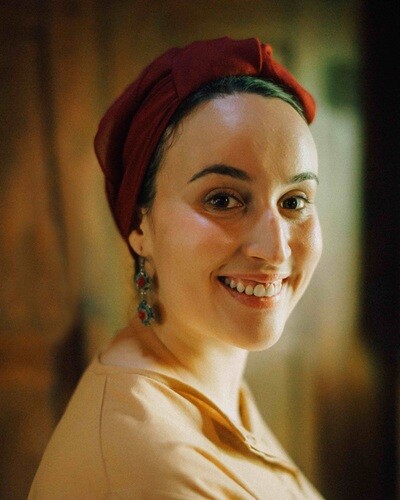
Samia Kotele is a historian and anthropologist of Islam in Southeast Asia. She holds a PhD in History and Anthropology from the École Normale Supérieure de Lyon (2024). Her thesis, on women ulama in Indonesia from the late nineteenth century to 2023, received a special mention from the jury of the 2026 GIS Moyen-Orient et mondes musulmans (GIS-MOMM) Thesis Prize.
Her research looks at Islamic feminist thought, women's intellectual history, and the gendering of religious authority in Indonesia and the wider Malay world. She draws on Malay and Jawi texts, the periodical press, and associational archives, as well as fieldwork in Java and Sumatra. As an Affiliated Fellow at KITLV, she will work on the project "From intellectual traditions to transnational expertise: Muslim women's knowledge and the circulation of Islamic ideas between Southeast Asia and the Arab World, 1905–present". The project traces how Muslim women's ideas and religious knowledge circulated between the two regions, from early reformist circles to today's women ulama movement.
Selected Publications
Kotele, Samia, 'Recognizing the research subject as an epistemic partner: Reflections on fieldwork with Indonesian women ulema'. ENS de Lyon, forthcoming.
Kotele, Samia, 'Les voix de l'antiféminisme en Indonésie: Une lecture historique des porte-parole de l'antigenre', Les Cahiers du CEDREF 27, 2025.
Kotele, Samia, 'Indonesian women ulema and the construction of figures of public authority.', in: Younès & Mostfa (eds.), Authority in Islam: What regulation? Éditions Peuple Libre, 2023.
Kotele, Samia, 'Review of Justice and beauty in muslim marriage: Towards egalitarian ethics and laws', in: Ziba Mir-Hosseini, Mulki Al-Sharmani, Jana Rumminger, and Sarah Marsso (eds.), International Quarterly for Asian Studies 54 (4), 2023.
Rohmaniyah, Inayah, Samia Kotele, and Rr. Siti Kurnia Widiastuti, 'Reclaiming an authority: Women's ulama congress network (KUPI) and a new trend of religious discourse in Indonesia', Academic Journal of Interdisciplinary Studies 11 (3): 60–70, 2022.
Research Project
From intellectual traditions to transnational expertise: Muslim women's knowledge and the circulation of Islamic ideas between Southeast Asia and the Arab World, 1905–present.