Events
SEA seminar | Shared heritage and social anxieties among the Chinese diaspora in Makassar
Friday 18 September
Hybrid seminar
Join us for the launch of the research project Mazu, Hantu, and Kue in Makassar! How has the Chinese community in Makassar turned experiences of uncertainty, vulnerability, and displacement into heritage? This new international collaborative project explores Makassar’s Chinese diaspora from the VOC era to the present, examining how religion, storytelling, and food have helped them navigate colonial rule, racial classification, and social change.
Temples dedicated to Mazu (媽祖), Guanyin (觀音), and Guan Gong (關公) were not only places of worship, but also spaces of mutual aid, social organization, and community life. Ghost stories (cerita hantu) connected to Chinese cemeteries carried memories of violence, displacement, and unresolved histories, while kue (粿) and other ritual and festive foods brought Chinese, Makassarese, and Malay traditions together.
By tracing these practices across Makassar and the Hokkien maritime world, the project asks how experiences of fear and marginality can become creativity, belonging, and shared heritage. The launch introduces the project’s research framework and plans while opening a conversation with community members about the histories, memories, traditions, and lived experiences that continue to shape Makassar’s Chinese heritage. It also marks the beginning of a longer-term dialogue between researchers and communities, with the aim of making research accessible as open educational resources and creating opportunities for future collaboration.
The newly launched international collaborative project “Mazu, Hantu, and Kue in Makassar: Shared Heritage and Social Anxieties among the Chinese Diaspora in VOC and post-VOC Asia” is led by KITLV researchers Tom Hoogervorst, Queenie Lin, and Louie Buana, and two collaborators from Indonesia and Taiwan, Andi Batara Al Isra (Universitas Hasanuddin) and Fabio Yuchung Lee (National Tsing Hua University), have been awarded a research grant from the Chiang Ching-kuo Foundation for International Scholarly Exchange (CCKF) for the period 2026–2028. Their research will examine the Chinese diaspora in Makassar from the VOC era to the present, and will be focusing on how communities have negotiated social anxiety and vulnerability through religion, storytelling, and food. This event marks the opening of this project and serves an introduction of this project framework, members and expected outcomes. It also seeks to build a sustainable bridge between research and community participation, which ultimately envisions these materials as open educational resources that can inspire future initiatives.
Mazu, Hantu, and Kue in Makassar: Shared Heritage and Social Anxieties among the Chinese Diaspora in VOC and post-VOC Asia
This international collaborative project between the Royal Netherlands Institute of Southeast Asian and Caribbean Studies (KITLV), Leiden University, National Tsing Hua University (Taiwan), and Hasanuddin University (Indonesia) investigates how the Chinese diaspora in Makassar transformed social anxiety—understood as a collective emotional and cultural response to colonial governance, racial classification, and spatial segregation—into enduring heritage during the era of the Dutch East India Company (VOC). By situating Makassar within the wider maritime networks of VOC-controlled Asia, the project traces how Chinese migrants, positioned between colonial authorities and indigenous societies, negotiated vulnerability through religion, ritual, storytelling, and food. It aims to reveal how such emotional and creative strategies became the foundation of Makassar’s Chinese heritage and how these practices intersect with those of Taiwan and other Hokkien diasporic worlds.
The project’s main objective is to reconstruct the intertwined histories of religion, folklore, and culinary tradition that shaped the Sino-Makassarese experience. Temples dedicated to Mazu (媽祖), Guanyin (觀音), and Guan Gong (關公) became key sites of protection, social organization, and moral order. These temples not only functioned as spaces of worship but also served as informal arbitration centers, meeting halls, and hubs of mutual aid for the local communities. In parallel, cerita hantu (ghost stories) emerging from Chinese cemeteries circulated as moral allegories about violence, displacement, and unresolved trauma. They reveal how spiritual imagination became a language through which people coped with the instability of colonial life. Meanwhile, culinary traditions such as the making of kue (粿; ritual cakes) and festive foods demonstrate how temple offerings gradually entered the city’s mainstream cuisine, fusing Chinese, Makassarese, and Malay influences. Together, these cultural forms transformed fear and marginality into creativity and belonging, turning the management of anxiety into a collective aesthetic and moral project.
Presenters
Tom Hoogervorst is a senior researcher at KITLV. He is trained in Southeast Asian Studies and has published extensively on Indonesia’s Chinese communities. . Tom’s research interests relevant to the proposed project are twofold: interethnic contact through language, and culinary history. The focus on Sino-Makassarese heritage brings together both strands of his scholarship. Since October 2022, he has also held an appointment as Adjunct Professor at Universitas Negeri Malang in Indonesia, further deepening his engagement and expertise in the region.
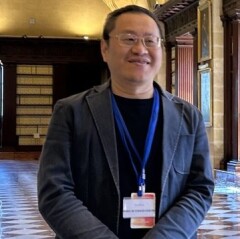
Fabio Yuchung Lee is an Associate Professor at the Institute of History, National Tsing Hua University, Taiwan. His research specializes in American history, Southeast Asian history, maritime history, Taiwanese history, and the history of Sino-Western encounters. His research focuses on the formation of the Spanish overseas colonial system and its transpacific networks across the Americas and Asia, aiming to reinterpret the Spanish experience in East Asia, the Philippines, and Taiwan from an imperial perspective. He also plans to expand this research toward Borneo and the Indonesian Archipelago, where interactions with the Dutch and British empires took place.
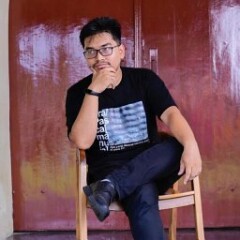
Andi Batara Al Isra is an anthropologist, writer, and lecturer at the Department of Anthropology, Hasanuddin University, Indonesia. His work explores how faith, mobility, and belonging intersect in transnational and local contexts. Batara also researches cultural resilience, maritime livelihoods, and food systems in Indonesia’s coastal regions. As researcher and program manager at Antropos, he has led initiatives on cultural literacy and community empowerment.
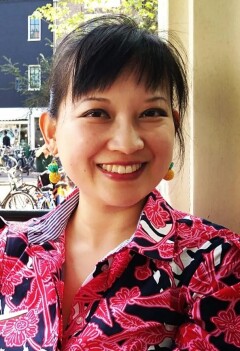
Queenie Lin is a PhD researcher at KITLV and Cultural Anthropology and Development Sociology, Leiden University, with a research focus on the sustainable preservation of climate-challenged Dutch overseas settlements in VOC Asia. Her research explores the often-overlooked phenomenon of how multicultural encounters and Asian diasporas, especially the diasporic Chinese, inspire and facilitate mobility and circulation of environmental knowledge, building technologies, and materials within and beyond the VOC port cities, and the intra-Asian knowledge exchange network established accordingly.
Louie Buana is a is a PhD researcher at KITLV and the Institute for History, Leiden University. His research focuses on the legal history of adat (customary law), environmental and maritime connections, and the interplay between Islam and colonialism in the Southeast Asian archipelago.Across his academic and creative work, he bridges scholarship, technology, and storytelling to reimagine the maritime and intellectual heritage of South Sulawesi.
Format, date, time & venue
This seminar is a hybrid event and will be held in the conference room of KITLV, Herta Mohr building, room 1.30, Witte Singel 27 A, Leiden and online via Zoom, on Friday 18 September from 15.00–17.00 PM (CET) with refreshments!
Image
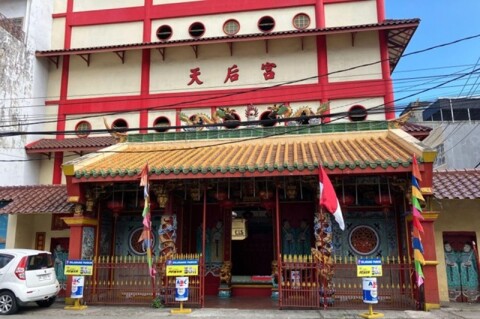
The Mazu temple (the Chinese sea goddess) in Makassar remains the cultural and religious anchor for the Chinese diaspora. Photo: Queenie Lin, 2024.
Details
Date
Friday 18 September
Time
15.00-17.00 PM (CET)
Location
KITLV, Herta Mohr building, room 1.30, Witte Singel 27 A, Leiden and online via Zoom.
Category
Hybrid seminar
Organizer
Fabio Yuchung Lee
Andi Batara Al Isra
Queenie Lin