Events
Book preview | Knowledge politics in the age of populism: Reorienting critical scholarship in/on Southeast Asia | Rommel Curaming
Tuesday 27 October 2026
Hybrid seminar
The rise of populism has been accompanied by a profound crisis of trust in experts and intellectuals. The standard response in Southeast Asia and beyond, such as fact-checking, denouncing fake news, and doubling down on nuanced critique, appears to be insufficient or even counterproductive. Exasperated by a public that seems to ignore their corrections, scholars often retreat into a defensive posture, blaming populist manipulation or public ignorance. This response fuels further distrust of the scholarly class and misses a deeply uncomfortable possibility: rather than scholarly rigor being the antidote to power or political interests, it may also be its most sophisticated enabling instrument.
Drawing on cases from Southeast Asian historiography, postcolonial theory, and knowledge politics, this book argues that the rise of populism is simultaneously an epistemological crisis emanating from common peoples’ alienation from the methods and aspirations of critical scholarship. The task, I argue, is not to offer sharper or more cogent critique, such as anti/post/decoloniality, but to reorient analysis toward what this book calls a cartography and accountancy of power/knowledge. Whereas conventional critique feeds into the needs of competing intellectual and political elites, this mapping out and accounting of the unequal power relations that underpin the production, consumption, distribution and impact of knowledge promises to be more relevant and responsive to the affective, pragmatic and often localized needs of the general public.
Speaker
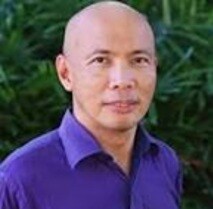
Rommel A. Curaming is a Senior Assistant Professor at the History and International Studies Programme and former Deputy Dean of the Faculty of Arts and Social Sciences (FASS) at the Universiti Brunei Darussalam (UBD). He obtained a PhD in at the Australian National University (ANU) and was a Postdoctoral Fellow at La Trobe University and the National University of Singapore (NUS). The empirical and thematic areas of his research focus on the analysis of the politics of the (supposedly) non-political, particularly historical knowledge production, consumption and distribution in Indonesia, Malaysia, and the Philippines. He published in journals such as Critical Asian Studies, South East Asia Research, Time and Society, Sojourn, Philippine Studies, among others. His book Power and Knowledge in Southeast Asia: State and Scholars in Indonesia and the Philippines was published by Routledge (2020).
Format, date, time & venue
This seminar is a hybrid event and will be held in the conference room of KITLV, Herta Mohr building, room 1.30, Witte Singel 27 A, Leiden and online via Zoom, on Tuesday 27 October from 15.00–16.30 PM (CET).

Details
Date
Tuesday 27 October 2026
Time
15.00-16.30 PM (CET)
Location
KITLV, Herta Mohr building, room 1.30, Witte Singel 27 A, Leiden and online via Zoom.
Category
Hybrid seminar
Organizer